Hello Lightning Tamers!
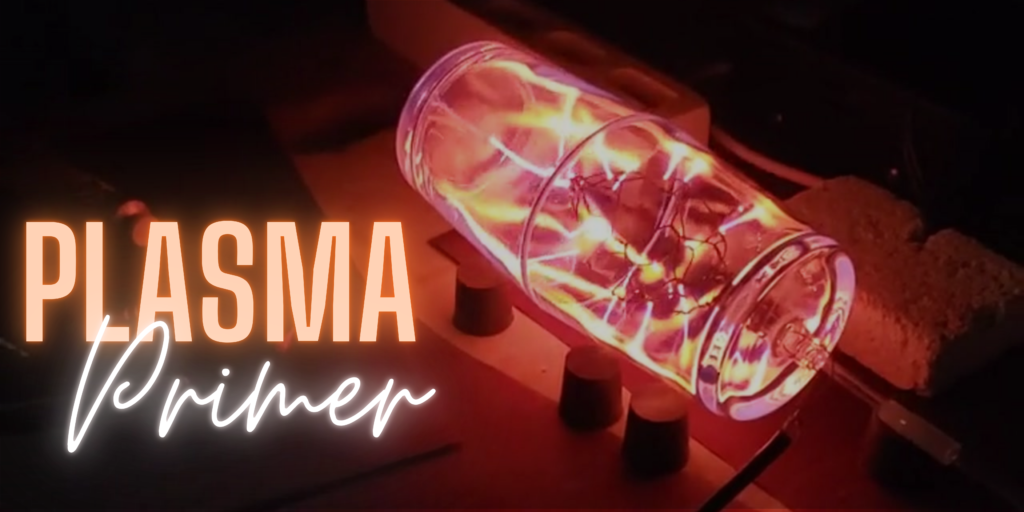
If you’ve spent any time around a plasma discharge — a Tesla coil, a neon tube, a vacuum flask with a whisper of gas in it — you already know the feeling: you’re looking at an element’s actual fingerprint. Not a line on a spectroscopy chart in a textbook, but the real color that atom makes when it’s excited enough to glow. It’s one of the things that hooked me into this work in the first place.
So I was thrilled to come across BagelGen’s Periodic Table of Plasma — a collaboration between TeslaCoilPro and Zerg Labs — which does exactly this, systematically, element by element.
BagelGen uses electrodeless induction plasma to photograph and film gas discharges across a huge swath of the periodic table — lithium through bismuth, with real emission spectra behind each entry. Beyond the straight element-by-element gallery, there’s a “Beyond the table” section covering excimer chemistry (XeF, XeCl), dusty plasma, flame plasma, multi-element mixes, and toroidal “donut vessel” discharges. It’s one of the more thorough visual references for this kind of chemistry that I’ve seen, and it’s a genuinely fun rabbit hole to fall into.
A caveat, because I’d rather say it than not
What you’re looking at in that gallery is the product of careful, deliberate work — vacuum technique, gas handling, and high voltage engineering, all combined. It is not a “try this at home this weekend” project, especially once you move past noble gases into halogens, metal halides, and reactive vapor mixes. Some of what’s shown here can produce genuinely hazardous byproducts — toxic or corrosive gases — if you don’t know exactly what you’re introducing into a discharge and why. High voltage plasma work carries real electrical risk on its own, before any chemistry even enters the picture.
If this gallery gets you excited to experiment — good. That’s the right reaction, and it’s the same one that got most of us into this field. Just take the extra step before you touch a vacuum manifold or a transformer:
- Learn what’s actually happening physically and chemically in a given mixture before you attempt it.
- Understand the specific hazards and byproducts of the elements or compounds involved — not just “plasma is generally fine,” but this gas, this voltage, this enclosure.
- Build in appropriate ventilation, containment, and high-voltage safety practices from the start, not after something goes wrong.
- Talk to people who’ve actually done it. This community is generous with what it knows — use that.
Curiosity is worth protecting. That means not letting it outrun the research.
Enjoy the gallery, and if you build something inspired by it, I’d love to see it.